








Prazniki
May Day
May Day Holidays
They begin as early as 27 April, when we celebrate Resistance Day (see the end of this article for more on the history associated with this day).
Have you ever really thought about what this holiday means? We do not celebrate the day of victory over the occupier, but rather the struggle against it—which could mean that the struggle and the occupation are still ongoing … 🙂
And then, in the blink of an eye, the first and second of May arrive. The first of May, Labour Day, which we celebrate by not working. And the second of May, when we rest from not working.
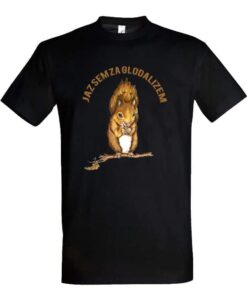
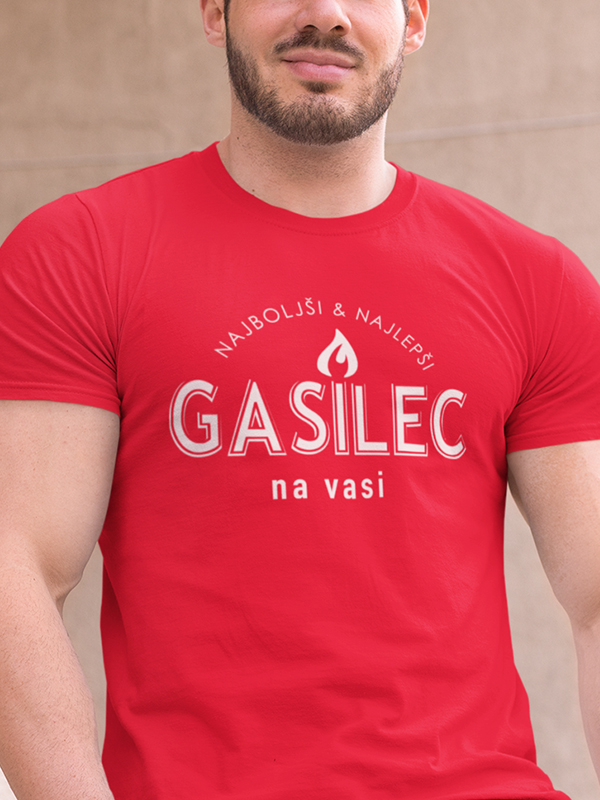
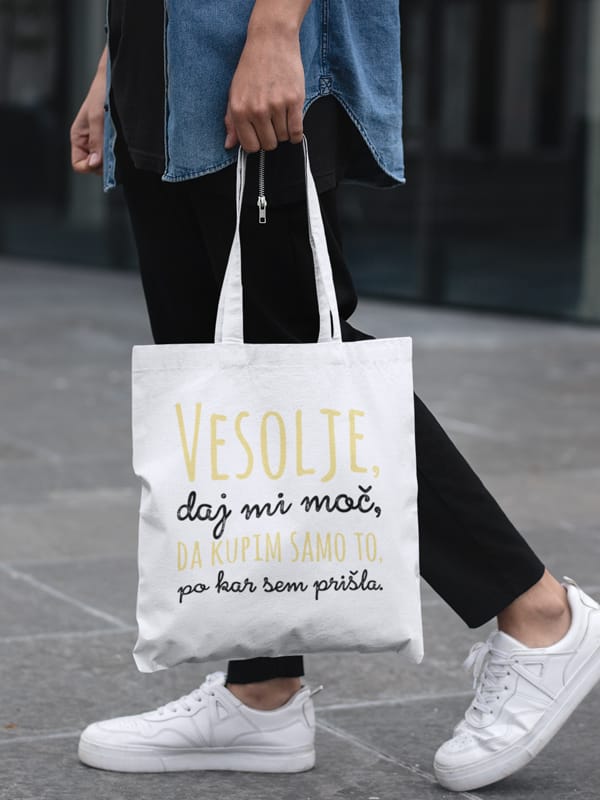
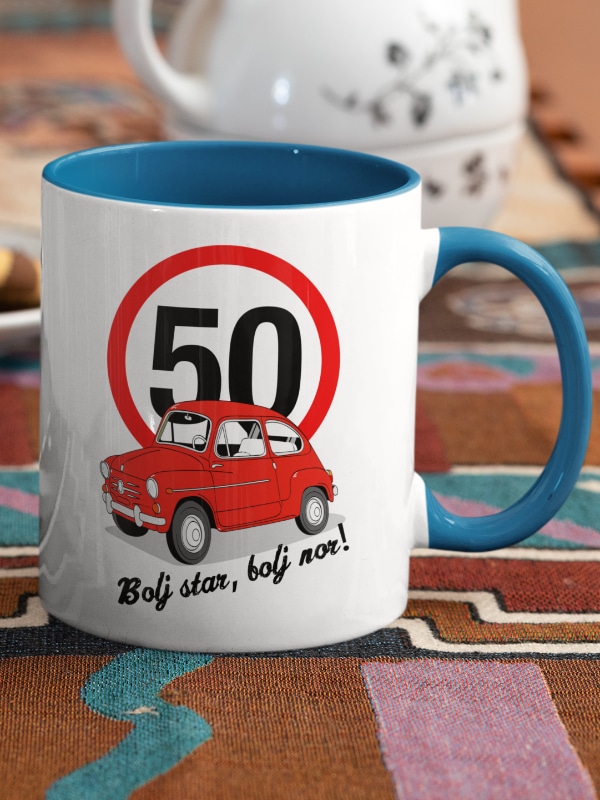
May Day T-Shirts
There are plenty of reasons for a fun May Day T-shirt. We are sure you know even more of them. But first, let us have some fun with a few ideas about the philosophy of Labour Day and different views on Labour Day, celebration and work 🙂
May Day in the System
May Day is a celebration of work, creation, creativity …
Some say it is an imposed holiday through which the elite want to instil an even stronger attachment to hard work and suffering in ordinary mortals. They suggest that this holiday is celebrated by people trapped in the system who feel comfortable in the cage of their everyday obligations. That people identify with the belief that life is nothing but suffering and that we must pay for our lives by giving at least eight hours a day, for little in return, to someone we probably do not even know—or by investing a third of our time “in the system”. They warn us that we must respect the system, otherwise it will exclude us, and that life outside the system is impossible, or at least unpleasant.
Maybe they are right.
Or perhaps we have the right to create in our own way …
May Day for Dreamers
The system would surely label many people as dreamers, if they were looking to the system for a label …
Humans are born to celebrate. Every second of breathing, moving and feeling. Every creation of their own and of others. Every act of co-creation and every ending. Humans are beings who understand their own impermanence throughout life and therefore string together moments within it that each seem eternal. In this way, they construct the seemingly entirely illusory meaning of their existence. They celebrate because they are. And they are because they celebrate.
Humans are born to work. Work is creation. When you work, you shape your idea, thought, vision or intuition into something tangible—a creation that gains a temporary touch of eternity. A creation is everything we make in our 3D reality. A creation can be a physical product, such as a chair or a lunch … Both are tangible, and both carry a certain relative permanence within them. As long as a chair is usable and we can sit on it safely, it endures. Until we eat the lunch, it endures. It exists as long as it is there. And it exists a little even after it is gone—its impact is felt as an echo or a memory. Once its practical value has ended, a chair can be turned into decorative sticks or used to light a fire in the fireplace. A lunch gives us energy and (temporarily) changes our overall well-being. It becomes integrated into our reality and becomes part of us.
Everything we humans make is a creation with an apparent, or relative, component of eternity. They seem to last longer than a moment, which gives meaning to our goal-oriented lives. We feel that when our lives have some meaning or purpose, they are worth living. When we have no goals or cannot create, we become sad, unmotivated and develop a sense of worthlessness.

Work is creation.
May Day therefore celebrates human creation. Cooperation with nature in exploring what else can be made. Which materials can we transform with our alchemical skills into something appealing, fun, useful, seemingly permanent and, above all, temporarily ours?
What beautiful things can we do for other people with our thoughts and words, which will at the same time make us happy and give meaning to a small part of our existence?
How can we co-create with pleasure and enthusiasm, and how can we find people who also want to create in company?
Work means creating in 3D reality. Transforming thoughts into words (or plans), making tangible changes (services and products), and of course enjoying the fruits of your work. We can work according to instructions (because the privilege of living must be paid for through sacrifice) or because something drives us to create. In any case, within the system, work is usually valued (and therefore also taxed or devalued). But that is not true creation. And it certainly is not true co-creation.
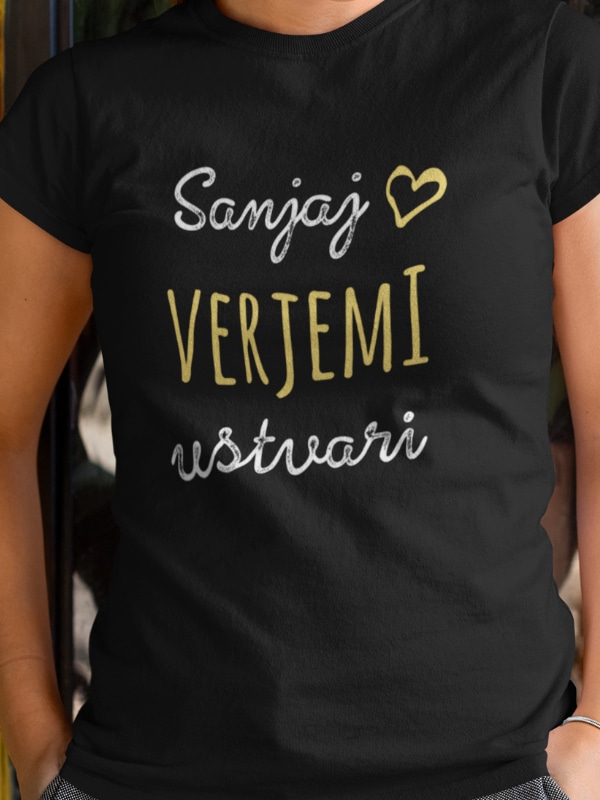
The higher purpose is co-creation.
Co-creation involves work—putting a certain amount of energy into shaping change in physical reality. However, it differs from conventional work in that it is more about enjoyment and exploring what else is possible, and less about creating (added) value as payment for mere existence.
A person who is born has the right to exist, breathe, develop, live, develop their feelings and explore the limits of their abilities. Humans are born for co-creation.
Co-creation does not require anything. And no condition leads to co-creation. It simply arises from the desire to explore while spending time with other explorers. What one person can do, two can certainly do, and it is even more fun when three people take it on at the same time.
T-Shirts and Nostalgia
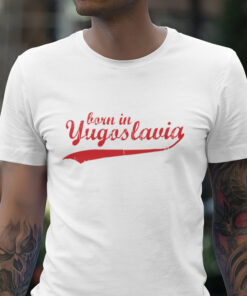
We do not create T-shirts because of nostalgia. Although nostalgia can be a source of inspiration and a powerful message.
T-shirts are a way to express your inner feelings, which arise in the moment and last for one, two, three or more moments. When we try to capture a moment among a multitude of moments and make it eternal, it usually slips through our fingers. But we can turn co-creation in the moment into something relatively lasting and seemingly permanent, enabling further co-creation.
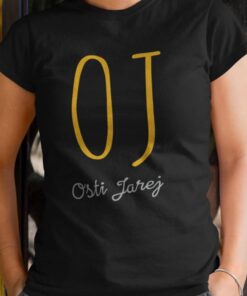
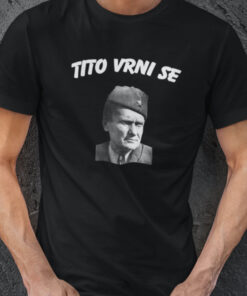
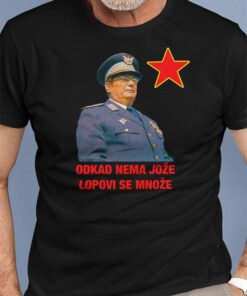
And this is where exploration begins. What designs awaken nostalgic thoughts in you? What slogan on a T-shirt gives you a pleasant feeling and a desire to celebrate? Not only this day, when you celebrate work by not working… Which design makes you smile? Which design will help you start a fun conversation? Which T-shirt slogan would you dare to wear on May Day?
You can order your own ideas on T-shirts here. Well, of course, also on sweatshirts and other products.
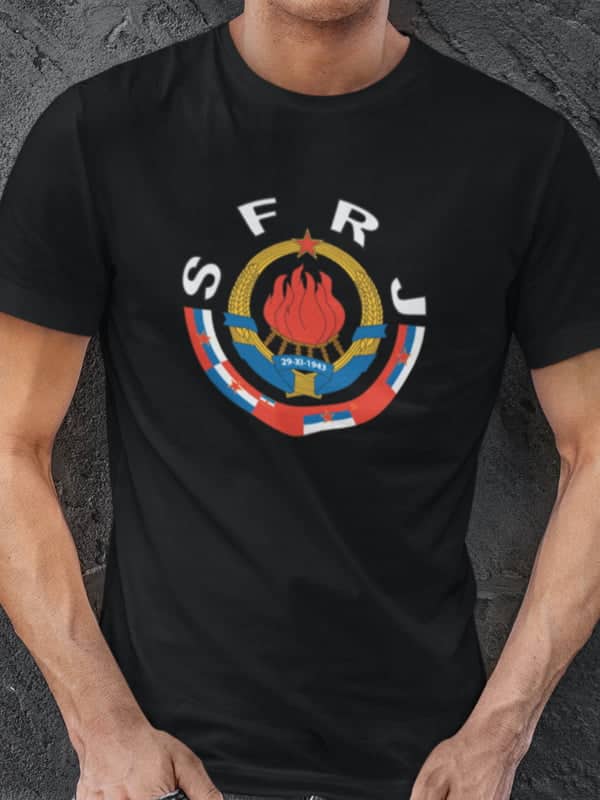
Resistance Day against the Occupier (sometimes simply Liberation Front Day or OF Day) is a public holiday celebrated in Slovenia on 27 April.
On 26 April 1941, it was agreed in Ljubljana to establish a resistance organisation (members of the KPS called it the Anti-Imperialist Front), which was renamed the Liberation Front of the Slovene Nation after the German attack on the Soviet Union on 22 June 1941. The OF was in fact established a day earlier, on 26 April 1941, in the home of writer Josip Vidmar, where representatives of several political parties and cultural workers met. They were: Boris Kidrič, Boris Ziherl, Aleš Bebler (for the KP), Josip Rus (for the left wing of the Sokol movement), Tone Fajfar (for the Christian Socialists), Ferdo Kozak, Franc Šturm and Josip Vidmar (for Slovenian cultural workers). Its original name at the time of establishment was the “Anti-Imperialist Front”. It was formed ten days after the Yugoslav army signed its surrender in Belgrade, and just over 14 days after the occupation of Slovenia. On 27 April 1944, the Commission of the Regional National Liberation Committee for the Slovenian Littoral declared 27 April a national holiday and a day off work (in addition to 1 and 9 May), and the day officially became a holiday when the Presidium of the People’s Assembly of Slovenia passed a law on 23 February 1948 highlighting the day of the founding of the O.F. as the brightest and greatest of all Slovenian days. It was celebrated until 1951, when, under pressure from the Serbs and with the support of Boris Kidrič, the People’s Assembly of the People’s Republic of Slovenia abolished it at a regular session—because the Slovenian resistance had occurred before the Serbian resistance. Although 27 April was no longer a day off work from 1952 and was no longer mentioned, its official abolition was not published until 1958. In 1951, on the initiative of the Congress of the Liberation Front of the Slovene Nation, a new holiday was introduced on 22 July—Slovenian National Uprising Day—when three members of the Šmarna Gora partisan group fired at a former gendarme, marking the beginning of the first organised partisan actions on Slovenian soil. Resistance Day against the Occupier was officially reinstated as a holiday in September 1968 at the initiative of Josip Vidmar, who said: “This is not the beginning of our struggle; the beginning of our struggle is 27 April, the day the OF was founded. We do not claim the distinction of being the first with a rifle in hand. Others were the first with rifles in hand, but we were already politically organised at that time.” Why 27 April was chosen and retained as the holiday, despite historians’ opposition, instead of 26 April, is unclear. One explanation is that nobody wanted a holiday on the day Adolf Hitler visited Maribor (26 April 1941). (Source: Aleksandra Kostanjevec, FB)